Let me Challenge you, Change you, and Cheer you on while you become the best version of YOU!

Contact me:
832.741.9404
tiff.nuno@me.com

Pro-Rated Boot Camp Session

Enter total # of classes at checkout

Yay Burpees!

Yay Burpees!
You know it, baby!

Tiff-Fit

Tiff-Fit
That's how we roll!

Wednesday, September 19, 2012

Eating Clean


A typical American diet is loaded with sugar, fat, and sodium, which often leads to high blood pressure, low energy, and an unhealthy digestive system. And that's just for starters. The best way to reduce your risk for many diseases and health issues is to choose natural and minimally processed foods. We call it eating clean, and it's one of the fundamentals of nutrition.


What Does It Mean to Eat Clean?


Eating clean is about choosing the least processed, most nutrient dense foods available to you. This means stepping away from the fast food, shopping in the outer aisles of the grocery store, and choosing fresh foods over boxed alternatives.
A clean diet focuses on choosing foods that are low in fat, high in fiber, and loaded with essential vitamins and minerals. Eating the least processed foods helps control blood sugar, stabilizes energy, and provides your body with sufficient amounts of fiber to help with digestion.

Benefits of Eating Clean

Improved Digestion

Clean foods, unlike processed foods, are loaded with natural enzymes that help with digestion. They help decrease inflammation and improve circulation, which helps the body remove waste. These foods are also high in fiber, which is needed to maintain a healthy digestive system.

Increased Energy

The high-fiber, less-processed carbohydrates found in whole grains, vegetables, and fruits are referred to as low glycemic index carbohydrates. The sugar (glucose) in this type of carbohydrate is released slowly, which helps you regulate blood sugar levels and maintain energy.

Weight Loss

Eating a clean, healthy diet can boost your metabolism and help you lose weight. A combination of high-fiber whole grains, vegetables, and fruits will help you feel fuller longer. Replacing unhealthy, processed foods can help you eat less calories overall and increase your fiber intake. Researchers found that people who consumed an additional 14 grams of fiber per day ate 10 percent less throughout the day.

The 80/20 Rule

The 80/20 rule is a key part of the clean eating lifestyle. While it would be ideal to eat the freshest foods all the time, no one has a perfect diet. Adopting the 80/20 rule gives you guidelines for how to eat your healthiest while leaving room to indulge on occasion.
  • 80 percent of the time: Eat healthy, nutrient-dense foods like fresh fruits, vegetables, and whole grains.
  • 20 percent of time: Eat the foods you enjoy that may not be good for your body—a drink with friends, a sweet treat, or your favorite takeout.
Following the 80/20 rule is a great way to establish habits for a healthier lifestyle. By allowing yourself to enjoy the foods you crave, you're less likely to have major cravings that send you on an unhealthy eating binge.

Simple Tips for Eating Clean

Shop Smarter

Going into the grocery store without a plan can lead to a diet disaster. Create a plan before you go to the store and you'll be more likely to fill your cart with healthy, nutrient-dense foods. Use these tips to shop smarter.
  • Eat a healthy snack before you go shopping. Going to the grocery store on an empty stomach can lead you right to the junk food aisle.
  • Make a list. Planning your meals for the week and making a healthy food list can help you get in and out of the store without getting distracted by unhealthy food options.
  • Shop the outer aisles. Most healthy, fresh foods are located along the walls of the store, although there are exceptions for dairy, natural foods, and bread/grain aisles.

Buy Local

Shopping at the farmer's market is a great way to find locally-grown, in-season foods. You won't have the temptation of packaged grocery store products, plus you'll be supporting local farmers and helping the environment.

Keep it Simple

Many packaged products are loaded with chemicals and hard-to-pronounce ingredients. If you can't decipher the ingredients, why put it in your body?

Decode Food Labels

Trying to eat clean can be tricky, especially when it comes to reading food labels (healthy, organic, lite, reduced). Food packaging is a company's advertisement. It's an attempt to lure you into buying their product. So while a product might claim to be healthy, it may be loaded with unhealthy ingredients. 

Have a Plan for Eating Out

While you can control what you eat at home, eating out makes it more challenging to eat clean. For simple strategies to make eating out healthier and easier, check out this link:
http://tiff-fit.blogspot.com/2010/11/plan-prepare-when-dining-out.html

Track What You Eat
Tracking what you eat will keep you motivated to eat well and you'll see better results. One way to make this process easier: keep a food journal or use a digital tracking tool. 

Clean Foods

You should never feel deprived of food just because you're trying to do what's healthy. Here's a short list of healthy foods to help you start eating clean:

Bread, Cereal, and Grains

  • 100% whole wheat bread (stone-ground or crushed wheat)
  • Ezekiel bread, muffins
  • Pumpernickel, rye, and sourdough
  • Quinoa
  • Oatmeal
  • High-fiber cereal (Kashi or Cheerios)
  • Couscous

Fruits and Vegetables

  • Leafy greens (collard, spinach, kale)
  • Beans (pinto, kidney, black, lima)
  • Lentils
  • Avocados
  • Apples, Bananas, Berries, Kiwis, Oranges
  • Dried fruit (raisins, apricots, figs) 

Meat, Fish, Nuts, and Dairy

  • Nuts: Almonds, walnuts, macadamias, pecans, cashews
  • Lean meats: chicken, turkey, beef
  • Fish: salmon, tuna
  • Dairy: Low-Fat Greek yogurt, fat-free milk, eggs

Eating Clean and Fiber

Fiber is a necessary part of any healthy diet. Loading up on high-fiber, clean foods can keep your heart healthy by lowering cholesterol levels, regulating blood sugar levels, and improving digestion, which can help prevent colon cancer.
So how much do you need? Experts recommend 32 grams of fiber a day. A good way to get enough fiber into your diet is by choosing foods that have at least 3 grams of fiber per serving. If your food of choice doesn't have 3 grams of fiber, then choose something else. Here's a quick list of foods that have roughly 3 grams of fiber: a banana, one slice of whole wheat bread, 1/3 of an avocado, 3 cups of romaine lettuce, an apple, or a medium baked potato.


Wednesday, September 12, 2012

How to Make Sense of Food Labels


The FDA recently informed 17 food manufacturers that their food labels mislead consumers about the health benefits of their products. The misrepresented claims included “100% Juice,” “No Sugar Added,” “Healthy Options,” and “Fortified with Antioxidants.”
While the FDA is cracking down on manufacturers, you still need to decipher for yourself what’s healthy. Keep in mind that food packaging is nothing more than an advertisement, an attempt to entice you to buy one product over another. Oftentimes the label is downright deceptive. Here’s what to look for to avoid getting tricked by food labels.

Healthy

A food can be labeled “healthy” if it’s low in fat (especially saturated or trans fat) and has limited cholesterol and sodium, but that doesn’t mean the item has the lowest amount of fat or the lowest sodium. In other words, it still may not be your healthiest choice.
What to look for: Don’t rely on packaging. Look for the cleanest and least processed form of food. Look for grains that are high in fiber, fruits that are in season, and natural nuts and nut butters that give your body fantastic fats. Keep highly processed foods to a minimum.

Organic

While there are hundreds of products emblazoned with the promise of being “all natural” and “organic,” many are not.
What to look for: Choose items with the United States Department of Agriculture (USDA) organic symbol. Keep in mind that “natural,” “all natural,” “hormone-free,” and “free range” are not the same as “organic.” To be organic, a product must contain 95 percent organic ingredients. Check the ingredients to confirm that the product is certified organic by the USDA.

Made With…

There are dozens of products pictured with bunches of fresh grapes, waves of grain, and many more that claim to be loaded with real fruit juice, whole wheat, and other ingredients. Many of these products are actually a combination of the promised ingredient mixed with other products or extracts of the desired ingredient.
What to look for: This label only means that the ingredient is included in the product (not necessarily as the main ingredient). Look for products with 100% whole grains or 100% juice (not juice cocktail).

Light or Lite

While a lighter version of a full-fat or high-calorie foods is at first glance better than the original version, keep in mind the calories, serving size, and other ingredients (sodium, etc).
What to look for: This label means that the food has 50 percent less fat or 1/3 fewer calories than the same brand’s regular version. So flip it over to check out the nutrition label. You’ll have a better idea of proper serving sizes and other ingredients.

Good/Excellent Source of…

This label means that one serving provides 10 to 19 percent of your total daily needs for a specific nutrient, such as fiber, calcium, and vitamin A. So don’t mistake it as supplying what you need for the day of a particular nutrient.
What to look for: On the nutrition label, look at how much of your daily value this source provides. You’ll want to make sure that you make up for the remaining percentage by eating other foods high in those nutrients. 
While not getting enough nutrients is bad, getting too much can also be dangerous. Be aware of foods that have vitamin and mineral levels well above the dietary reference intakes. In particular, watch out for the fat soluble vitamins—A, D, E and K—because they're stored in the body, and when consumed in excess they're not excreted like water soluble vitamins. Your best bet: Aim to get most of your nutrients from fresh foods instead of water with antioxidants or energy drinks loaded with vitamins, for example. Water and fruit would be a better choice.

Reduced…

A food labeled as “reduced” has 25 percent less (fat, saturated fat, sodium, sugar, cholesterol, or calories) per serving than the regular version of the same food. But just because something has reduced fat doesn’t mean it isn’t still too high in sodium, sugar, or other ingredients.
What to look for: Again, flip the product over and take a look at the nutrition label. Reduced fat cheese and reduced calorie beverages may not give you the health benefits or calorie savings you’re looking for.

Thursday, August 30, 2012

Five Quick and Easy Lunch Ideas


Lunch is definitely one of those meals where people often have the best intentions, but things often go awry. If you don’t prep and pack your lunch in the morning for the day, and instead, rely on your ability to make good decisions when you are starving and faced with multiple opportunities to stray from your usual intake, you are in trouble.

While some people do have an iron will, resist the temptation and make good choices, that is not most of us!  This is where packing your own delicious and healthy lunch can come in and prevent that from ever being an issue in the first place.

Since time is always an issue, here are 5 quick lunch recipes that you can makein 10 minutes or less before you head off to work and take with you.

One quick note is that many of these recipes call for pre-cooked chicken breasts, as this can be a HUGE timesaver. In a large Pyrex dish, cook chicken breasts that have been cut in half (so they are half as thick) or chopped at about 350°F for approximately 20 minutes, or until done.  To retain moisture, cover dish with tin foil.  Season these breasts to taste with sea salt, garlic powder, Montreal chicken seasoning, or anything you like prior to cooking.

1.    Chicken, Pesto & Guacamole Wrap: This is a quick and delicious wrap that is loaded with healthy monounsaturated fats, vegetables, protein, and quality carbs.  You can make this in less than 5 minutes!

Ingredients:
•    1 cooked chicken breast, chopped and seasoned to taste
•    1 sprouted-grain or whole-grain wrap
•    1-2 large handfuls baby spinach
•    1/4 cup chopped cucumbers
•    2 tbsp basil evoo pesto
•    2 tbsp guacamole
•    1 plum or other small piece of fruit

Directions: Evenly spread pesto onto wrap. Lay spinach on top in an even layer.  Then lay down chicken breast on top of spinach.  Spread guacamole on top of chicken breast and toss in diced cucumbers.

Enjoy with carrots and hummus or other produce of choice.  Makes 1 serving for men, and 2 for women.

2.    Spinach, Chicken & Feta Salad: This is a quick and delicious salad that is loaded with protein, vegetables, monounsaturated fats, and blood sugar-controlling vinegar.

Ingredients
•    1 chicken breast, chopped and seasoned to taste
•    2 cups baby spinach
•    ½ cup red onion, chopped
•    1 tbsp extra virgin olive oil
•    1 tbsp balsamic or red wine vinegar
•    2 tbsp feta cheese
•    4 large kalamata olives (optional)
•    ¼ cup black beans (optional)

Directions: Mix all ingredients together to make this delicious salad!

For some people, salads don’t seem to hold them over as long as other meals, so adding ¼ cup of black beans can add a small amount of starchy carbs and fiber to keep you fuller, longer. Makes 1 serving.

3.    Tuna Salad Sandwich: Tuna salad is usually made from regular mayonnaise (which is made with low-quality vegetable oils) and higher-mercury tuna.  Making it yourself allows you to use a mayonnaise made from healthier oils and wild-caught tuna that is lower in mercury.  This meal can also be made into a wrap if preferred.

Ingredients:
•    1 can wild-caught tuna
•    1 tbsp expeller pressed canola oil mayonnaise
•    1/4 cup chopped onions
•    1/4 cup chopped cucumbers
•    1/4 mashed avocado (or 2 tbsp guacamole)
•    1 handful baby spinach
•    2 slices sprouted-grain or whole-grain bread, toasted
•    sea salt and pepper to taste  

Directions: Toast bread.  In a large bowl mix tuna, expeller pressed canola oil mayonnaise, onions, cucumbers, and avocado (or guacamole).  Set aside.  Lay spinach on top of toasted bread.  Spoon tuna salad onto bed of spinach.  Sprinkle with sea salt and pepper to taste.      
 
Enjoy with sliced peppers or other produce of choice.  Makes 1 serving for men, and 2 for women.    

4.    Vanilla, Fruit & Yogurt Parfait: While most people think of yogurt as a simple snack food or addition to your lunch, in a pinch it can make a delicious and nutritious lunch by itself.  Do be aware that fruit flavored yogurts are either loaded with sugar or artificial sweeteners, and you want no part of either one.

This recipe provides plenty of high-quality protein, probiotics, healthy fats, fiber, and berries to keep you full until dinner!

Ingredients:
•    6-8oz 2% plain Greek yogurt or whole-fat regular yogurt
•    ½ to 1 scoop vanilla protein powder
•    ½ to 1 tbsp milled flax or chia seeds
•    1 to 2 tbsp chopped walnuts
•    ½ to 1 cup fresh or frozen berries of choice

Directions: Mix the protein powder and seeds in with the yogurt until evenly distributed.  Add in fruit and sprinkle chopped walnuts on top.  For women use the smaller portion sizes, for men the larger.  Makes 1 serving.

5.    Lunch Portion of Dinner Leftovers or Large Batch of Chili, Stew, etc.: A simple way to have a healthy lunch is to make an extra large dinner the night before.  Purposefully make your dinner with an extra serving that you simply refrigerate.  Come the next morning, you have a healthy lunch already made and packed!

Another option is to make a large batch of chili or beef stew, which can provide you with several lunch servings throughout the week.  This is a perfect meal to make on Sunday, providing you lunch for most of the work week!
Here is a delicious chili recipe that fits the bill nicely.

Ingredients:
•    ~1.5 lbs of lean ground beef, grass-fed if possible
•    1 large onion, chopped
•    1 large green pepper, chopped
•    2 cans stewed tomatoes, 14oz each
•    1 can tomato sauce, 16oz
•    1 can light red kidney beans
•    1 can dark red kidney beans
•    1 can garbanzo beans
•    1 small can of corn
•    2 tbsp chili powder
•    2 tbsp extra virgin olive oil

Directions: Cook the beef, onion, and green pepper in a large skillet over medium heat with 2 tbsp extra virgin olive oil.  In a large pot combine the tomatoes, tomato sauce, kidney beans, garbanzo beans, corn, and chili powder and cook over medium heat.  Do not drain canned goods.  Once the beef, onion, and green pepper mixture is thoroughly cooked, add to the large pot.  Stir and simmer uncovered for 15 minutes.
Makes 5 servings for men, and up to 10 servings for women.   

Tuesday, August 28, 2012

Fall Boot Camp & Training


TIFF-FIT BOOT CAMP & Training
SEPT. 10 - NOV. 3 
Boot Camp located in Greatwood - Sugar Land
WEEKLY - Nutritional Guidance
LOSE - Inches & Body Fat
GAIN - Strength & Tone
Accountability
This is an 8 week session.
Class Times:
Monday--5:00 am boot camp (parking lot @ Greatwood Training Center)
             6:00 am boot camp (parking lot @ Greatwood Training Center)
             8:00 am boot camp (Sugar Land Memorial Park)


Tuesday--5:00 am group training (Greatwood Training Center gym)
              6:00 am group training (Greatwood Training Center gym)
              8:00 am group training (Greatwood Training Center gym)

            
Wednesday--5:00 am boot camp (parking lot @ Greatwood Training Center)
                   6:00 am boot camp (parking lot @ Greatwood Training Center)
                   8:00 am boot camp (Sugar Land Memorial Park)


Thursday--5:00 am group training (Greatwood Training Center)
                8:00 am group training (Greatwood Training Center)


Friday--5:00 am boot camp (parking lot @ Greatwood Training Center)
            6:00 am boot camp (parking lot @ Greatwood Training Center)
            8:00 am boot camp (Sugar Land Memorial Park)


Saturday--7:00 am (Sugar Land Memorial Park & Macy's parking garage, alternating weeks)


Can start anytime -- will pro-rate session

If you have travel plans, no worries! You can still join us at a pro-rated price. Contact me to discuss. 

  • Cash, check, or credit card accepted. 
  • Payment due by first class of the session. 
  • Checks made out to Tiffany Nuno.

Payment options: (Pricing is for the entire 2 month session.)
  • BOOT CAMP ONLY--
  • 2x/week: $240
  • 3x/week: $300
  • 4x/week: $400
  • Pay with cash and receive discounted price.
  • 2x/week: $215
  • 3x/week: $270
  • 4x/week: $360

  • BOOT CAMP WITH TRAINING--Many options to choose from! Ask me about gym membership! Cash discount available!
  • 1x/week Boot Camp, 1x/week strength training: 
  • $280 non-GTC member (cash-$255)
  • $255 GTC member (cash-$230)
  • 1x/week Boot Camp, 2x/week strength training: 
  • $440 non-GTC member (cash-$395)
  • $390 GTC member (cash-$350)
  • 2x/week Boot Camp, 1x/week strength training: 
  • $400 non-GTC member (cash-$360)
  • $375 GTC member (cash-$340)
  • 2x/week Boot Camp, 2x/week strength training:
  • $560 non-GTC member (cash-$505)
  • $510 GTC member (cash-$460)
  • 3x/week Boot Camp, 1x/week strength training:
  • $460 non-GTC member (cash-$415)
  • $435 GTC member (cash-$395)
  • 3x/week Boot Camp, 2x/week strength training:
  • $620 non-GTC member (cash-$560)
  • $570 GTC member (cash-$515)
  • Other PAYMENT OPTIONS--
  1. Paypal (small fee applied) Check the top of the website for this payment method.
  2. Pay via credit card on site.
What you can expect from Tiff-Fit:
Physical fitness assessment
Workouts catered to your fitness level
Cardiovascular endurance
Strength training
Speed and Agility
Circuit training
Core Strengthening
Plyometrics
Body fat percentage testing (upon request)

You will need:
  • Yoga Mat (thicker is better)
  • Dumbbells (one or two pairs ranging from 5-10 pounds)
  • Workout gloves
  • Jumprope
  • Water,water, water 
  • Towel 
  • Appropriate clothing for weather
  • A Great Attitude!
Come join us! I promise you'll get hooked!
Sign up today! If there is an interest for a different time or location please let me know. If there are enough requests for a particular time or area I will start another camp to accommodate your fitness needs and schedule. 

Wednesday, August 22, 2012

How To Stop Gaining Weight – Simple Tips You Should Follow


Let's talk about how to stop gaining weight and how to do it soon. The fact is that the longer you wait and the heavier you become, the harder it is to go back to your optimal weight. So, if you want to avoid more weight gain, keep reading.


Figure Out The Cause

The first thing you need to understand is why you’re gaining weight. For the most part, the reason is that you’re eating too many calories and burning too little of them. However, there are cases in which your lifestyle has very little to do with your weight gain. It is due to issues out of your control. These issues may include certain medical issues, like a thryoid gland problem or various medications. This should be easy to clear up with your doctor. However, I wouldn’t bet on it. I would go ahead and try to figure out how to get my calorie intake down and my calorie outtake up.

The Calorie Game

Basically, you gain weight when you consume too many calories, more than you burn. These excess calories are usually stored as fat (unless you’re using them to build muscle mass due to a rigorous weight training routine). This is the fat that you’re bothered about and why you want to stop gaining weight.

To stop gaining body fat you must prevent a calorie surplus by consuming less calories and burning more of them. Let’s go over some tips on how you should do this.

Consuming Less Calories

There are two main things that you should do: choose healthy foods which are not calorie rich and eat smaller portions regardless.

Here are some of the unhealthy food choices that you should avoid:

  • Fancy coffee drinks, sodas, various (not natural) fruit juices, and other high calorie beverages.
  • Alcoholic drinks, in particular cocktails. It should noted that alcohol leads to fat gain regardless of the calories it contains. The very nature of alcohol and how the body processes it leads to a slower fat burning.
  • Foods which are rich in oils (olive and coconut oil are the exceptions).
  • Fried foods and fast foods.
  • Foods rich in white flour.
  • Refined sugar and foods which contain it.
  • Highly processed foods like frozen pizza, TV-dinners, chips, various snacks, etc.
  • Candy and milk chocolate (dark chocolate with 70% or more of cocos is good for you).
  • Foods which are rich in artificial sweeteners.

Some of these foods make you fat not just by the calories they themselves contain, but due to the way they influence your body. Let’s just say that some foods have a semi-addictive power over us and this may lead to us to crave more of them, feel hungrier and eat more as a result. Remember, food manufacturers want to sell more product. They want hungry consumers.

Eating Smaller Portions

It’s not just what you eat, but how much you it of it. You have to eat smaller portions if you want to stop weight gain. Here are some tips on how to do so:

  • Eat slowly and focus on your food. Don’t eat in front of the TV.
  • Never eat out of bags of a cartoon. Place your portion in a dish.
  • Eat from smaller dishes as people tend to eat whatever is in front of them.
  • Don’t eat when you’re emotional.
  • Don’t go for hours without food.
  • Throw out those foods which are most tempting for you, those which you know you can’t resist.

Above all, you need to have a sense of what you’re eating. You don’t have to count calories, but yo do need to keep general track of what you eat.

Burning More Calories

Your body burns calories even in your sleep. In fact, even for active people who train a lot, most of their burned calories come from their normal bodily functions and not via exercising. However, if you want to stop gaining weight and drop a few pounds you will need to actively burn additional calories.

This can be done in three ways:

  • Non-exercise activity such was walking up stairs instead of taking the elevator, working around the house, etc.
  • Working out without exercising with activities such as ball games, hikes, dancing, etc.
  • Regular exercise.

To do the first two you simply need to have a more active mindset. You need to seek out ways to move yourself more. Each day, you have the opportunity to make many choices whether to be active or not. These are often little things which burn just a few extra calories. However, these add up.

Your choice of hobbies is also important. Reading is awesome, but it doesn’t really get you to move. You need active hobbies like dancing, cycling, playing ball games, etc. Even if you hate exercising, these should be fine since you do things you love.

Just be more active each day and you will find it easier to maintain a proper calorie balance and prevent weight gain.

Exercising

To really amp up your calorie burn rate you need to exercise regularly. At a minimum, you should perform three workouts a week, but if you can, I would do five. 

In your workouts you need to push yourself. You must give it all you got to create a high intensity atmosphere in your workouts. This is how you burn a lot of calories.

Some forms of exercising are better than others for fat loss. High intensity interval training and circuit training are both metabolically expensive, meaning that they burn a lot of calories and also provide you with a higher metabolism for hours after your workout is done. If you want to literally burn more calories in your sleep, this is the way to go.

The main thing about exercising is to train your whole body, work hard, and do it regularly. If you do that, you should see great improvement in your body composition.

Bottom Line

Now you know how to stop gaining weight and how to begin losing it. It’s a simple concept: not eating more calories than those you burn. Reduce your calorie intake and raise your outtake. 

Thursday, August 16, 2012

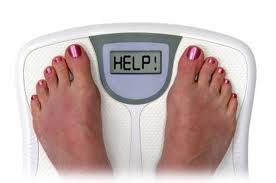
That Dreaded Scale


QUESTION: How often should I weigh myself?  It’s frustrating not to see that scale moving yet...

RESPONSE:

When speaking with women about their weight loss plans, one of the biggest mistakes I hear about is that they step on their scale every single day (as does my husband, but he's a whole other story!) Not only is this a brutal act of torture, but the daily numbers are also hugely inaccurate. And daily monitoring is completely unnecessary.

Yes, it is great to set weight loss goals for yourself. Monitoring your weight regularly can help you stay in control. But there are many reasons why constant daily feedback from your scale is a bad thing.

The scale can be your best friend one day and your most hated enemy the next. On days when the pounds go down, you will be very happy. But what about the days when you step on the scale expecting to see the numbers going down, and to your horror, they go up? Now you’re discouraged and may feel like your weight loss efforts are a waste of time. This can lead to complete diet sabotage.

The problem with daily weighing is that our weight naturally fluctuates from day to day. The main reason the scale goes up and down from day to day is not your failure, but simple water retention. Remember that the long term goal is what is important, not the minor fluctuations that occur naturally from day to day.

A better way to determine if your weight loss efforts are paying off is to ask yourself how you feel overall. Do your clothes fit a little looser? Does your body feel a little tighter? Leaner? Do you feel like you have more energy and strength throughout the day? Remember that a scale can’t tell if you have lost fat and gained muscle, so always listen to your body, not the scale.

How can you beat the daily weigh-in dilemma? Most importantly, step on the scale no more than once per week. Be consistent. Always weigh yourself on the same scale. Step on the scale on the same day of the week, every time.

Weigh yourself first thing in the morning. Because of the different foods we eat and fluids we drink daily, we gain pounds and lose pounds and gain them again throughout the day. Weighing yourself first thing in the morning before you’ve had anything to eat or drink will give you the most accurate reading.

Keep in mind that when you start a weight loss routine, you will likely start losing inches before you start losing pounds. Do not be discouraged if you have been at it for a while and the scale is not showing you the results you expected. Remember that weight loss takes time. Stick to your diet and exercise program, along with weekly weigh-ins and that scale will start creeping down in no time.

Tuesday, August 7, 2012

3 Foods to Avoid


Here are three foods that will put you on the fast track to fat:

Breakfast Cereal: This one is a little deceptive. No one thinks of cereal as being a threat to their health. But no matter which one you choose, breakfast cereals are high on the glycemic index.

For many people, a dose of high-glycemic carbs in the morning is the prescription for building excess body fat. You'd almost be better off eating a candy bar or a piece of cake. (But don't take that as an ok to go grab a piece for breakfast!)
Check out this old post regarding cereals: http://tiff-fit.blogspot.com/2011/02/cereal-choices.html

French Fries:
Possibly the worst foods you can eat. First off, potatoes are high-glycemic and not good for you in any form. But when you take potatoes and deep-fry them in trans fatty oil, you have a recipe for sickness and disease.

While white potatoes aren't the best choice, the oil they're cooked in adds much more danger than the potatoes do. If you need a potato fix now and then, opt for a baked potato or, better yet, sweet potatoes. They're loaded with carotenoids, vitamin C, potassium, and fiber.

Bagels and Breads:
Don't fall for the "whole-grain goodness" trap. When it comes to the glycemic index, it matters very little whether breads are made from whole grain or not. Grains spike your blood sugar, and you know what that means...And too much sugar in our bloodstream is dangerous. After we eat these foods, insulin comes along to take the sugar out of our blood and push it into our cells, where it can be used as fuel. The thing is, insulin is so good at its job that it overcompensates–it takes too much sugar out of our blood, and when that happens, we feel hungry again even though we just ate! And what do we crave when our blood sugar gets low? More sugar. No wonder they call it a rollercoaster!

Try Ezekiel muffins or bread in place of these.